
Abhijit Pathak’s work in this exhibition stretches across twenty four feet, yet its starting point is disarmingly simple. A line. A mark. A return to drawing.
That return became central to our conversations.
Drawing, in Abhijit’s practice, sits at the core. It is where his thinking is most direct. Where the hand moves with clarity. Where observation and instinct meet without delay. Over the years, as his practice expanded into large scale mixed media works layered with material and complexity, that core remained present, even as new elements entered the surface
This work comes from revisiting that origin with intent.
The conversation was not about stripping the practice back to an earlier stage. It was about recognising what sits at its centre and allowing it to lead again. A recalibration. A shift in emphasis. A conscious movement toward spontaneity and observation.
In this work, drawing is not a preparatory act. It is the work.
Line becomes thought. Mark becomes decision. The surface becomes a record of attention moving across space. There is a sense of immediacy that returns. The work feels responsive rather than predetermined. The eye leads. The hand follows.
What makes this work particularly compelling is how this return to drawing holds within scale.
At twenty four feet, the body enters fully into the act of making. The gesture expands. The arm extends. Movement becomes visible. The work is experienced as much through physical engagement as through visual perception.
This is where Abhijit’s range becomes evident.
He moves across scale with ease. A small drawing and a monumental work share the same internal logic. The sensitivity of line carries through. It does not dissolve in scale. It stretches, adapts, and holds.
Across this surface, different intensities of mark making coexist.
There are areas where the line remains light, almost tentative, close to drawing in its most intimate form. Elsewhere, the marks gain force. The body asserts itself. Pressure, speed, and movement become visible. These shifts do not compete. They sit within the same field, held together through rhythm and balance.
The work builds through accumulation.
Marks gather, disperse, return. Subtle elements exist alongside more assertive gestures. The surface develops through a continuous process rather than a fixed plan. It feels arrived at through engagement.
As one moves along its length, the work changes.
It reveals itself in parts. Density shifts. Rhythm alters. Areas open up, others condense. The viewer adjusts distance, pace, and attention. The experience deepens through duration.
Despite its scale, the work holds attention through detail.
This is where it aligns closely with the framework of Holding the Gaze. The work does not rely on scale to dominate. It holds through variation, through the presence of the hand, through the accumulation of decisions.
Reduction operates here in a precise way.
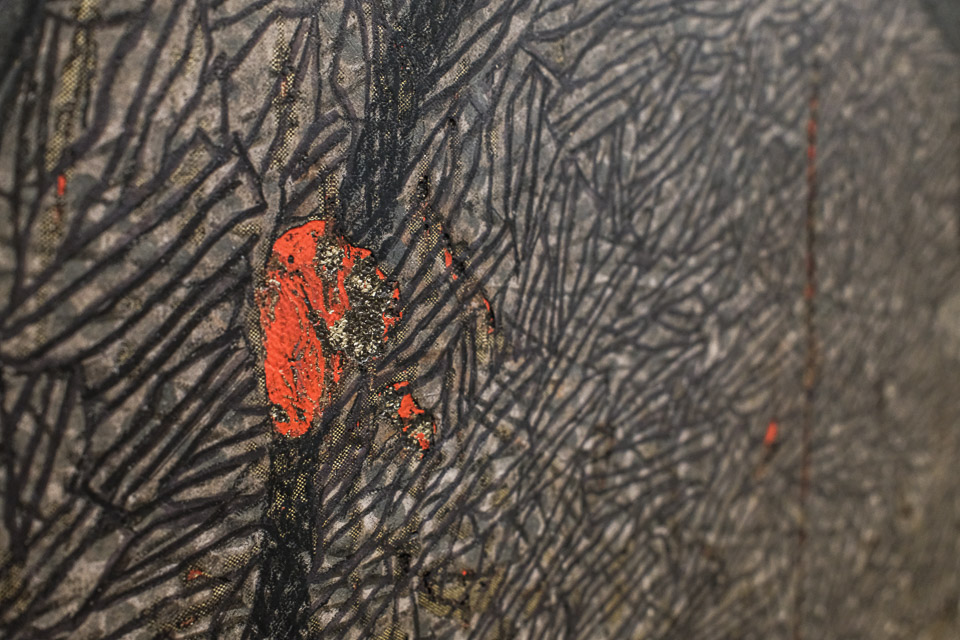
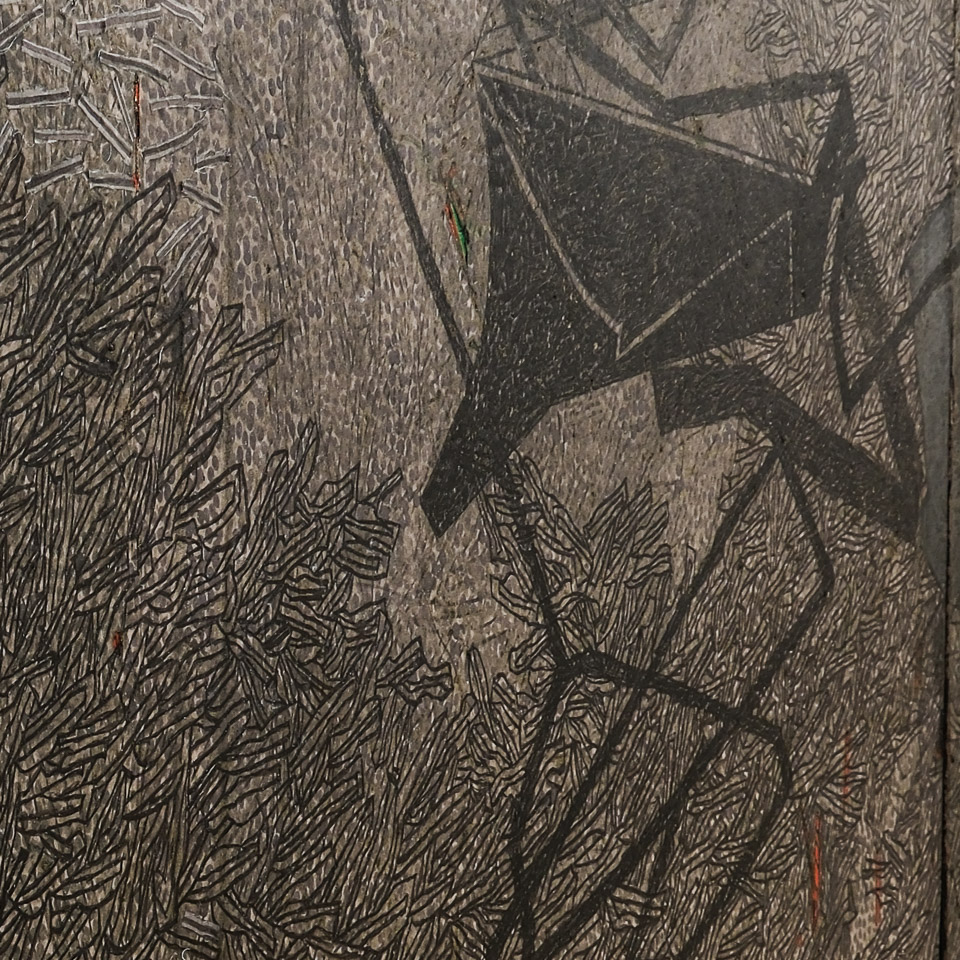
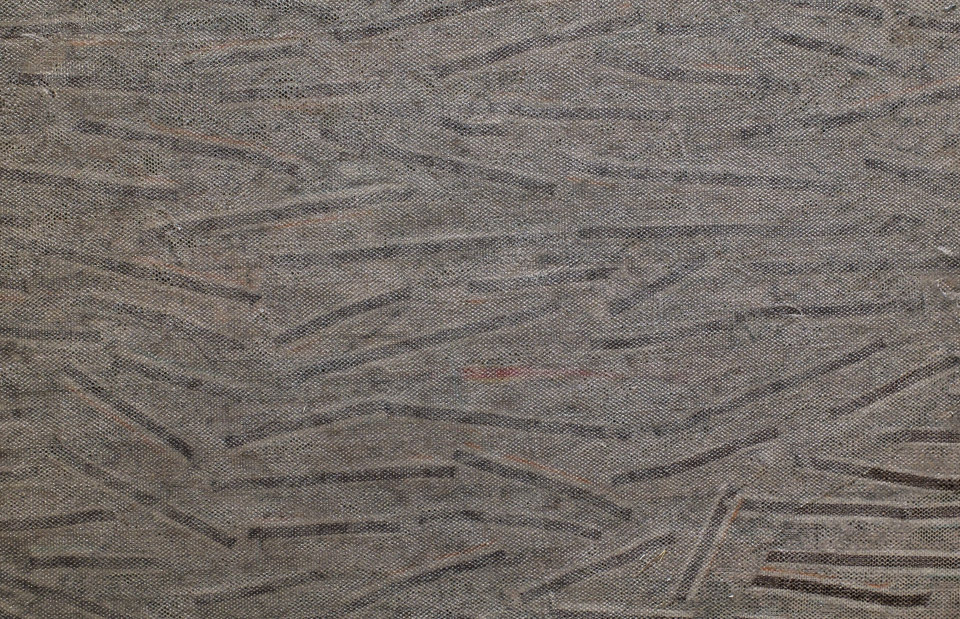
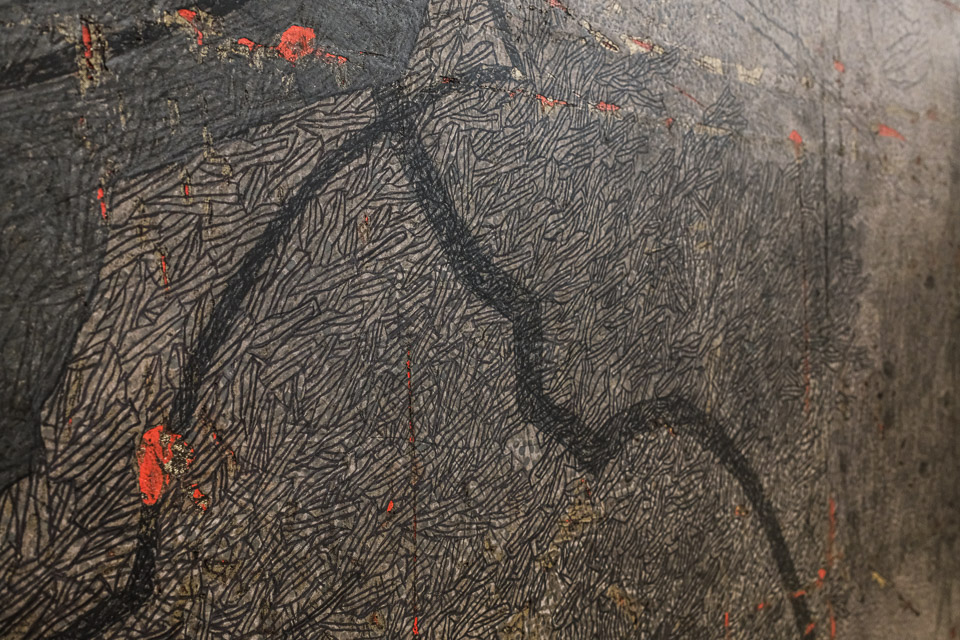
The language is direct. Line. Mark. Surface. Within that clarity, the work expands into a complex field of perception. Each gesture carries intention. Each shift holds weight.
There is a balance that runs through the work.
Control and spontaneity remain in dialogue. Structure holds the surface together while the marks retain their immediacy. This tension gives the work its energy.
The return to basics in this work is exact.
It comes from recognising that the essence of the practice sits in drawing. In the act of marking a surface with attention. Everything else builds from that point.
This work gathers those strands.
The intimacy of line.
The physicality of scale.
The range of mark making.
The sensitivity to surface.
It offers a field to move through.
To look.
To stay.
To register how a single line can carry as much presence as the full expanse.
The work can be viewed at Art Explore, Panchsheel Park, New Delhi from 13th April to 8th May, 11am to 6pm Monday to Saturday.