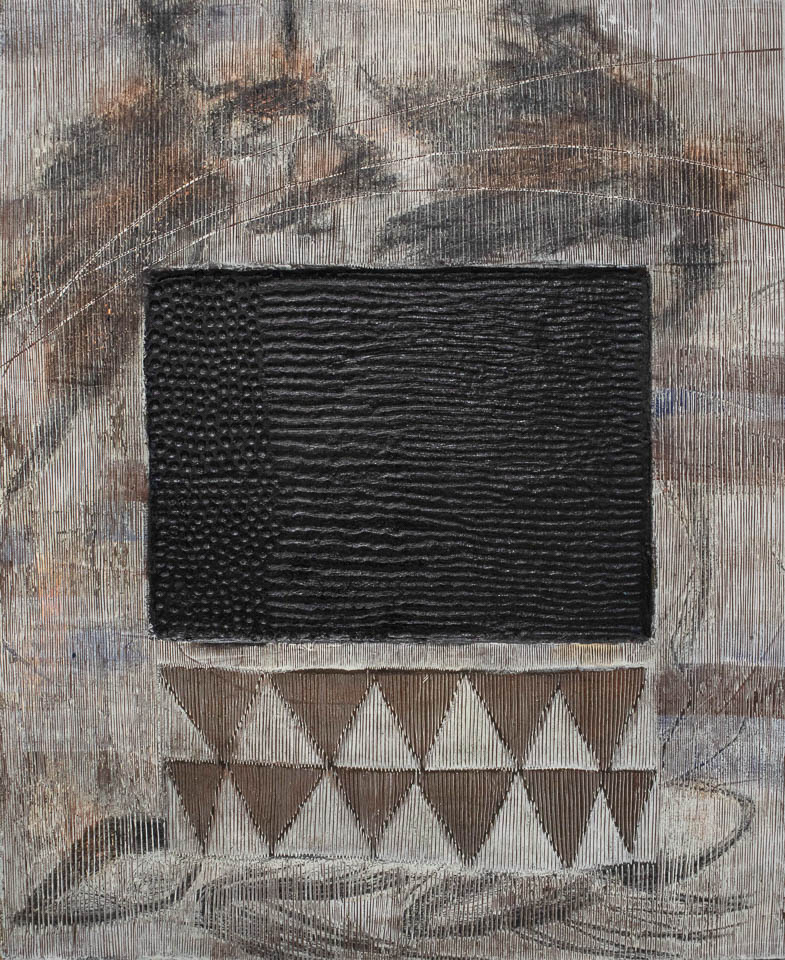
Throngkiuba Yimchungru’s artworks stand at the edge where memory meets urgency. His practice is rooted in two intertwined concerns: the fragility of Nagaland’s ecosystem and the cultural continuity of its people. He has focussed on the environmental cost of development—oil exploration, road construction in the mountains, coal mining proposals—all projects that cut through land and memory with equal force.
For What Must Endure, Yimchungru turns to timber and debris, materials already bearing scars of use. He works them through the traditional technique of Naga wood carving, a choice that ties the present to the ancestral. Carving is labour-intensive, deliberate, almost ritualistic. By using it, he situates his work in a lineage while also questioning what that lineage faces in an age of extraction and erasure.
The forms and elements in his work carry symbolism. They recall ritual architecture, ancestral motifs, and communal objects, but they are never nostalgic. They are transformed into signals, into questions. A carved surface might suggest the ordered rhythm of a community structure, but its ruptures and sharp cuts recall lands split open by mining. A form that could be read as protective also resembles a barricade, caught between defence and warning.
Oil exploration, road building, coal extraction—these are not abstract threats in Nagaland. They cut forests, divert rivers, flatten mountains. Yimchungru responds not with didactic imagery but with presence. His works hold the weight of what is lost, but also the strength of continuity. By shaping debris into form, he shows how destruction itself becomes material for memory. By carving timber, he reminds us of the forests that must be protected.
He calls himself a facilitator. “Somebody has to question what is going on in the world today,” he says. The questioning happens through matter. His works ask: What remains when mountains are carved by machines instead of hands? What survives when roads push through sacred landscapes? What endures when coal seams take precedence over community?
Placed in the frame of What Must Endure, Throngkiuba’s works take endurance beyond sentiment. They speak of survival under pressure, of cultural practices facing ecological collapse, of traditions forced to carry the burden of modern extraction. They are not monuments but witnesses. Heavy, grounded, impossible to ignore.
If Talaulicar’s works in this exhibition capture the fleeting traces of memory and feeling, Yimchungru’s anchor endurance in the collective body of land and culture. Together, they suggest that what endures is not guaranteed—it must be chosen, carved, and carried forward.
For Throngkiuba Yimchungru, carving is both an act of remembrance and resistance. Each cut is a refusal to forget. Each form holds a question: when the forest is gone, the mountain blasted, the river blackened, what must endure?
WHAT MUST ENDURE STARTS 22ND SEPTEMBER.