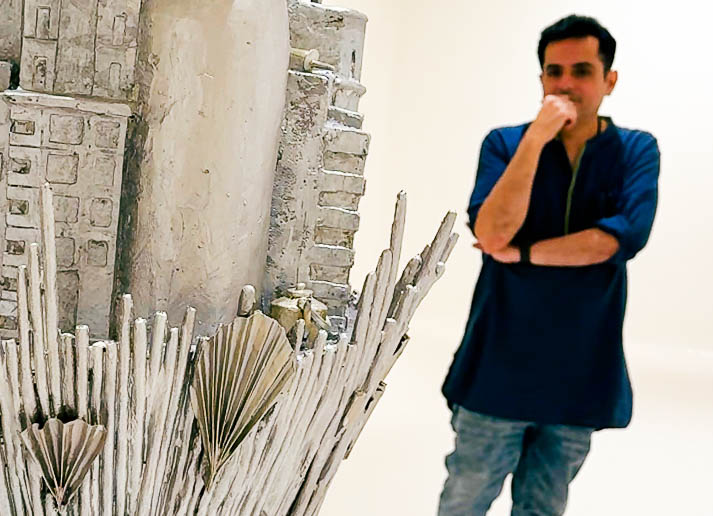
Suchit Sahni has always dealt in memory. His earlier works, especially the iconic vintage car sculptures, offered sleek, minimal tributes to a disappearing past—familiar forms given a near-futuristic finish. The surface seduced. The subject invited longing. His aesthetic was precise, the nostalgia understated.
The new works go deeper. They hold less back.
In this latest series of sculptures and paintings, Sahni isn’t just evoking nostalgia. He’s trying to visualise it. That’s harder. Nostalgia is unstable. It softens and distorts. Translating that into sculpture demands a shift—from form to feeling. From perfection to vulnerability. From polish to texture.
The choice of metal remains, but the treatment has changed. Where the earlier works celebrated surface, these embrace weathering. There’s pitting, dullness, irregularity. Edges that don’t curve clean. Memory, after all, is never smooth. Sculpting it requires material to behave less like metal and more like time—layered, unpredictable, unfinished.
Scale has shifted too. Some of the new sculptures feel more intimate, others larger and more abstract. Both approaches pull the viewer in. One feels personal, like a fragment from someone’s home. The other, architectural—monuments to collective memory. Neither is decorative. Both resist easy reading.
The paintings are a surprise. Unexpected yet inevitable. They carry the same atmosphere, the same emotional residue, but through colour, light, and blur. They act as memory fields. Impression over description. Gesture over clarity. These paintings extend his language. They open up his world.
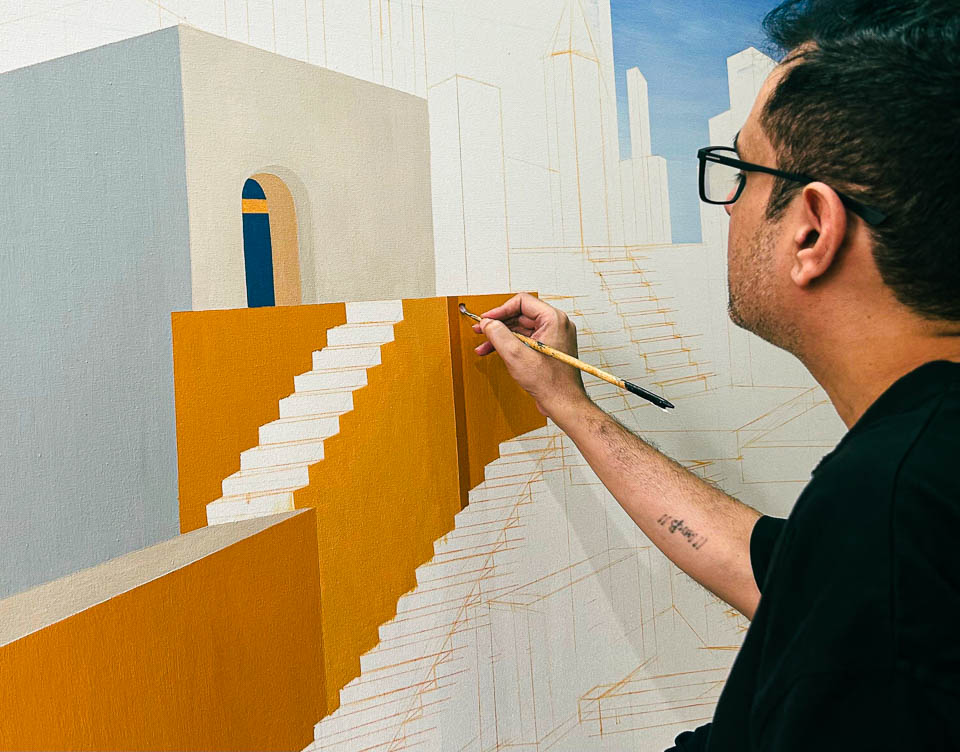
It’s a pivot. Sahni is still exploring nostalgia and pressing into it more honestly. Moving beyond symbols of nostalgia into its felt terrain. The new body of work keeps him rooted in his ecosystem, but loosens the aesthetic control.
Being presented soon at Art Mumbai, this series marks a quiet turning point. Suchit Sahni is still speaking of the past, but the voice has changed. Less bling. More human.