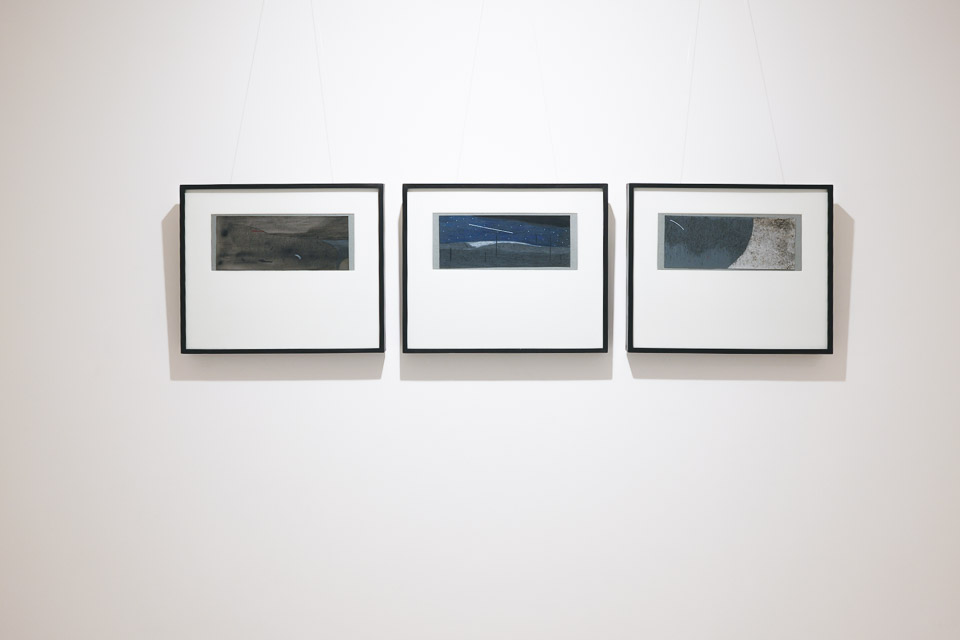
There is a strange prejudice in contemporary art against the small work. The assumption persists that scale equals seriousness. Bigger works dominate fairs, museums, Instagram feeds, and gallery booths because they command attention instantly. They perform well in photographs. They announce themselves before they are even understood. But attention and depth are two different things.
Small format work asks for something far more difficult from the viewer. Time.
A small painting cannot bully its audience into submission. It cannot rely on spectacle, architectural presence, or physical intimidation. The work either holds attention through sensitivity, intelligence, rhythm, tension, materiality, or it collapses immediately. There is nowhere to hide. Every mark matters. Every decision becomes visible.
This is precisely why small format remains one of the most honest spaces in contemporary art.
Scale has become a kind of camouflage in parts of the art world. Large works often create emotional effect through sheer physical encounter. You walk into the room and feel overwhelmed before you have even processed the work itself. Sometimes this is justified. Artists like Jitish Kallat or Serra understood scale as psychological architecture. The size was integral to the experience. But many younger artists inherited scale without inheriting necessity. The result is work enlarged beyond its own intellectual or emotional capacity.
A weak idea becomes louder through scale. A mediocre painting becomes “immersive.” An unresolved surface becomes “gestural.” Empty ambition expands to fill the wall.
Small works expose all of this instantly.
The eye behaves differently in front of a small work. You move closer. Your body slows down. Looking becomes active rather than passive. You begin examining edges, transitions, hesitations, silences, corrections, textures, fragments. The viewing experience becomes intimate rather than theatrical.
This intimacy matters deeply today because contemporary viewing habits have become increasingly distracted. Most viewers consume images at speed. Art fairs encourage rapid scanning. Social media rewards instant recognition. Museums themselves are turning into spaces navigated through phones. Large scale survives this environment easily because it can be consumed quickly. Small scale resists it.
A small work cannot be understood in passing.
You have to meet it halfway.
That demand creates a more serious relationship between artwork and viewer.
In India, this conversation becomes even more important.
The Indian art ecosystem still struggles with access. The audience for contemporary art remains relatively narrow compared to the size of the country. A large percentage of potential collectors feel alienated before they even begin. Contemporary art is often presented as financially inaccessible, intellectually coded, or socially exclusive.
Small format changes this equation dramatically.
For emerging collectors, smaller works create entry points. Someone buying their first artwork is far more likely to begin with a work on paper, a small painting, a photograph, or a modest sculpture than with a monumental canvas costing several lakhs. This is not merely about affordability. It is about psychological accessibility. Ownership begins to feel possible.
And collecting culture matters enormously.
Countries with strong collecting ecosystems are rarely built only through elite buyers purchasing museum scale works. They grow through thousands of people buying thoughtfully, living with art daily, discussing artists, supporting practices over time, and developing visual literacy across generations.
Small format helps create this culture.
A young professional in Mumbai, Bangalore, Goa, or Delhi may not have the wall space, financial freedom, or confidence to acquire large works. But a small work can enter their life. It can sit near a desk, above a bookshelf, inside an apartment, beside daily routines. The artwork becomes part of lived experience rather than a distant luxury object.
This proximity changes the relationship between art and audience.
You return to the work repeatedly. You notice new things. The artwork grows slowly over years. Many of the greatest works in history operate precisely this way. They unfold through repetition rather than impact.
There is also a sensitivity unique to small format that large works often lose.
Artists working small tend to become more attentive. Compression sharpens instinct. A slight tonal shift matters. A tiny imbalance destroys the image. Gesture becomes disciplined because excess immediately feels dishonest. The work develops concentration.
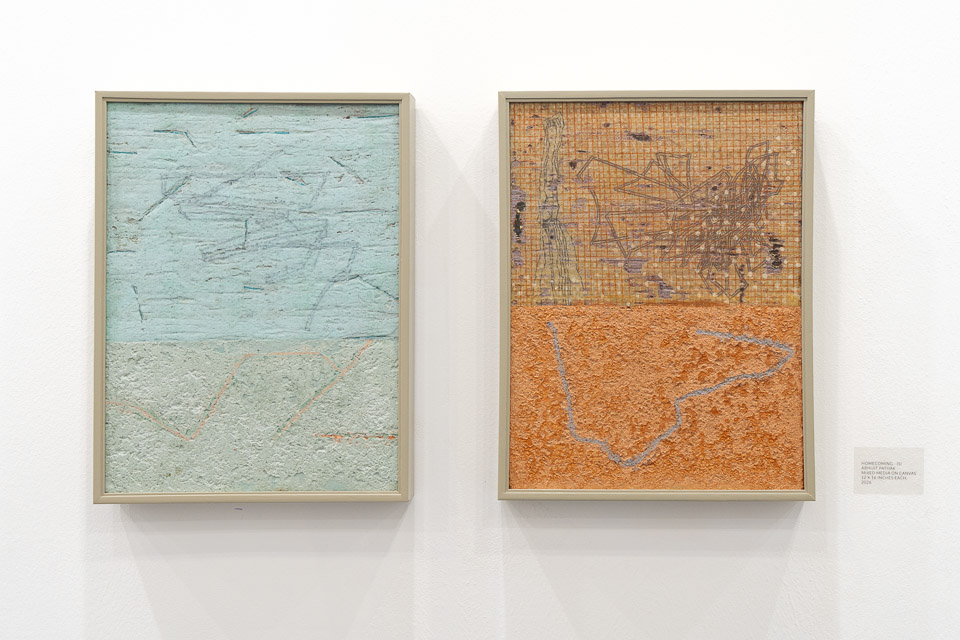
One sees this across traditions and generations. Indian miniature painting understood this deeply. So did Japanese prints, early photographs, manuscripts, drawings, devotional objects, notebooks, and intimate portraiture. These works were designed for closeness. Their power emerged through attention rather than domination.
Contemporary art often forgets this lineage because the market rewards visibility over intimacy.
Art fairs contribute to this problem. Booths compete architecturally. Works need to be visible from twenty metres away. Artists begin producing for spatial impact before conceptual precision. The fair becomes a visual battlefield where subtlety struggles to survive.
Ironically, some of the most memorable works at fairs are often the quietest ones. The piece that forces you to stop. The small painting hidden between louder works. The photograph that demands proximity. The drawing that reveals itself slowly after the noise fades.
These works remain with viewers longer because discovery creates memory.
Small format also encourages experimentation. Artists can take risks without the burden of scale and production cost. They can test images, structures, emotional registers, materials, and ideas more freely. Many important artistic breakthroughs first appear in smaller works before evolving elsewhere.
The sketchbook remains more alive than the monument.
There is another uncomfortable truth here. Many artists struggle with small format because it reveals technical weakness immediately. In a large work, energy can mask uncertainty. Repetition can create false confidence. Surface activity can substitute for depth. In a small work, awkwardness becomes exposed. Weak drawing shows instantly. Poor composition becomes impossible to ignore.
Small format demands control.
Or at least awareness.
This is why serious painters often respect small works immensely even if the market values larger ones more aggressively.
For galleries too, small format presents an opportunity. Instead of treating smaller works as secondary inventory or “starter pieces,” they can be positioned as intellectually serious practices in themselves. Curators can build exhibitions around intimacy, concentration, and close looking rather than spectacle alone.
The future of contemporary art audiences in India may depend partly on this shift.
If the goal is expanding engagement rather than merely maintaining exclusivity, then small format deserves far greater attention. It creates collectors. It creates viewers. It teaches patience. It trains the eye. It rewards curiosity. It builds relationships with art that are sustained rather than performative.
Big works will always have their place. Scale can be transformative when necessary.
But size alone is never depth.
Sometimes the smallest work in the room contains the most intelligence, restraint, vulnerability, and precision.
You simply have to stop long enough to see it.
Beginning 22 May, the gallery will present Mini 3, a group exhibition centred entirely around small format works. The exhibition asks both artists and viewers to reconsider scale and attention within contemporary art. In these works, every surface, gesture, and decision becomes visible. The exhibition also reflects a larger belief that small format can play an important role in building future audiences and collectors for contemporary art in India.
Cover: Rubkirat Vohra
Text used with permission from art dose